Juicy Set Shop
Responsibilities: Product strategy · UX and information architecture · Interface design · E-commerce platform research · Shipping and logistics research · Shopify setup and implementation · Launch support and digital presence strategy
Before the project started, the business relied on manual communication to process every order. A customer discovered a product on social media, sent a message asking about size availability, price, and shipping, and the founder manually confirmed the order and arranged delivery. The buying experience was slow and unpredictable. The process was not scalable. There was no central product catalog where customers could browse the collection. From a product perspective, the system lacked structure, automation, and trust.
The project focused on three main goals: Create a centralized e-commerce store where customers could browse and purchase products. Simplify the checkout experience so orders could be completed without manual communication. Implement a reliable and affordable shipping solution that would allow the brand to serve customers across Lithuania. A secondary goal was to build a stronger digital presence that could drive traffic to the website.
JuicySet is an independent clothing brand based in Lithuania that sells casual fashion pieces to a young audience through social media. When the founder approached me, the brand was already gaining attention online. However the purchasing process was completely manual and difficult to scale. Most orders were coordinated through direct messages, which slowed down sales and created unnecessary operational work.
The goal of the project was to transform this informal process into a structured digital shopping experience that would support business growth across Lithuania. I designed and launched the brand's first online store, implemented an affordable nationwide shipping system, and helped create a digital ecosystem where social media traffic could convert into actual purchases.
Like many small business projects, this work happened under practical constraints.
The brand had a limited budget.
The founder was managing the business alone.
There was no development team involved.
The final solution needed to be easy to manage without technical knowledge.
These constraints strongly influenced the product decisions and platform selection.
Many independent clothing brands attract customers through social media, but the transition from discovery to purchase is often inefficient. Several friction points appeared during analysis:
The key insight was simple. Customers needed a clear and immediate path to purchase. A structured online store could remove most of the friction currently present in the buying process.
Shipping quickly emerged as one of the most important parts of the project. Lithuania has a strong network of parcel lockers located in supermarkets, shopping centers, and residential areas. These lockers allow customers to collect packages from secure drop boxes rather than receiving them at home. Customers are already familiar with this system and many prefer it because it is convenient and flexible.






I researched several courier services operating in Lithuania and compared their offerings across multiple dimensions. Key providers included Omniva, DPD Pickup, LP Express, Venipak, Smartpost (Itella), and Unisend, all of which offer parcel locker and courier delivery options across the country. The comparison focused on:
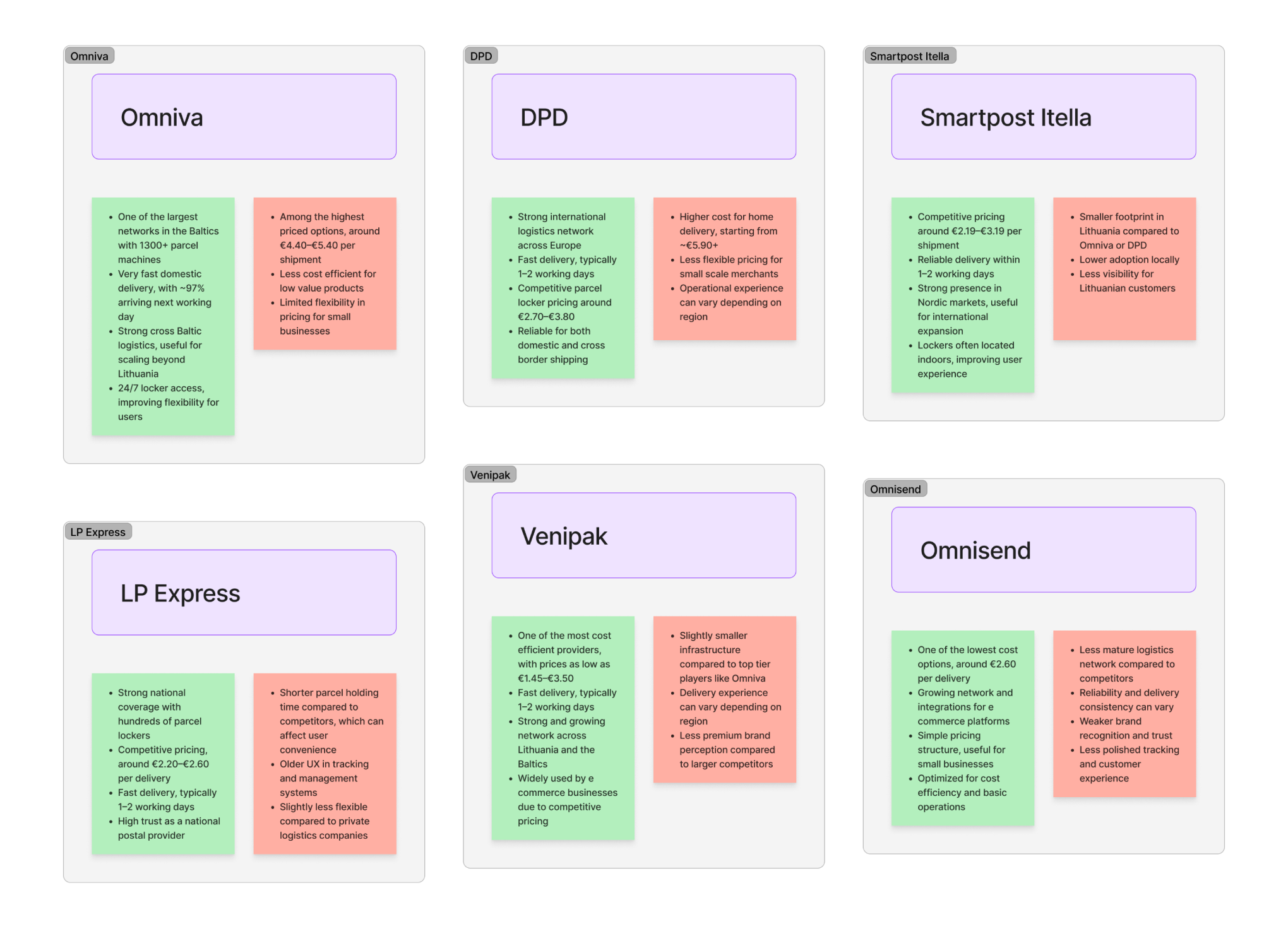
FigJam board used to compare courier providers based on pricing, coverage, and operational trade-offs
While most providers offered similar delivery speeds and nationwide coverage, the key differences came down to cost, reliability, and operational simplicity. Parcel locker delivery ranged between €1.45 and €5.40, depending on the provider, creating a significant impact on final product pricing and conversion.
Improved affordability, but came with trade offs in reliability and consistency.
Strong infrastructure and performance, but reduced margins for the business.
The final decision prioritized a provider that balanced affordable pricing for customers, reliable and fast delivery, and simple day-to-day operations for the business owner.
This ensured a delivery experience that was both cost effective and scalable, without compromising customer trust.
After evaluating multiple platforms, I recommended using Shopify. The decision was based on several factors:
Most customers discovered the brand through social media platforms.
of customers were coming directly from social media channels, primarily Instagram — based on the founder's input. This meant the majority of website visitors would arrive from mobile devices.
Because of this, the entire experience was designed using a mobile first approach. Product pages prioritized large imagery, clear pricing, and simple size selection to support fast and intuitive purchase decisions.
Parcel lockers were chosen as the primary delivery method. This decision offered several advantages:
Research shows that parcel locker delivery is the dominant behavior in Lithuania.
of Lithuanian shoppers prefer out of home delivery options, supported by a dense nationwide network and rapidly growing usage, with millions of parcels delivered through lockers each year.
Together, this indicates that parcel lockers are not just an alternative, but a well established and trusted delivery standard, making them a highly practical and user aligned solution.
To simplify shipping operations and improve the checkout experience, I implemented Parcely.app. The app acts as a middleware layer between the store and multiple courier providers, allowing integration with services like Omniva, DPD, LP Express, and Venipak in a single system. From a user experience perspective, it adds an interactive map during checkout where customers can easily select their preferred parcel locker location. This aligns with local behavior and reduces friction in the delivery step.
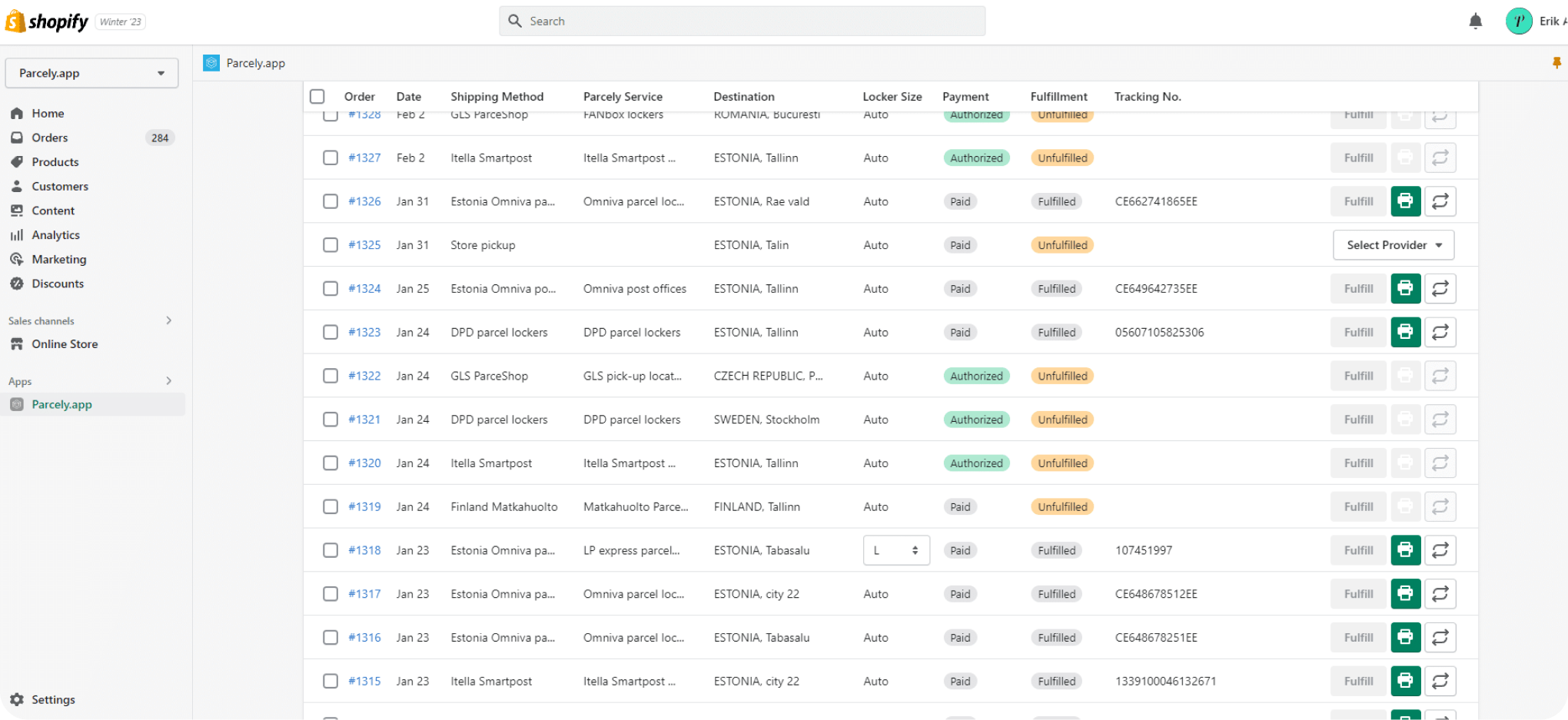
An example of Parcely.app's dashboard
On the operational side, the app automates key parts of order fulfillment. Orders can be exported directly to courier systems, shipping labels can be generated within Shopify, and tracking codes are automatically added to customer notifications. This significantly reduced manual work for the business owner and created a more scalable workflow, while maintaining a consistent and intuitive delivery experience for customers.
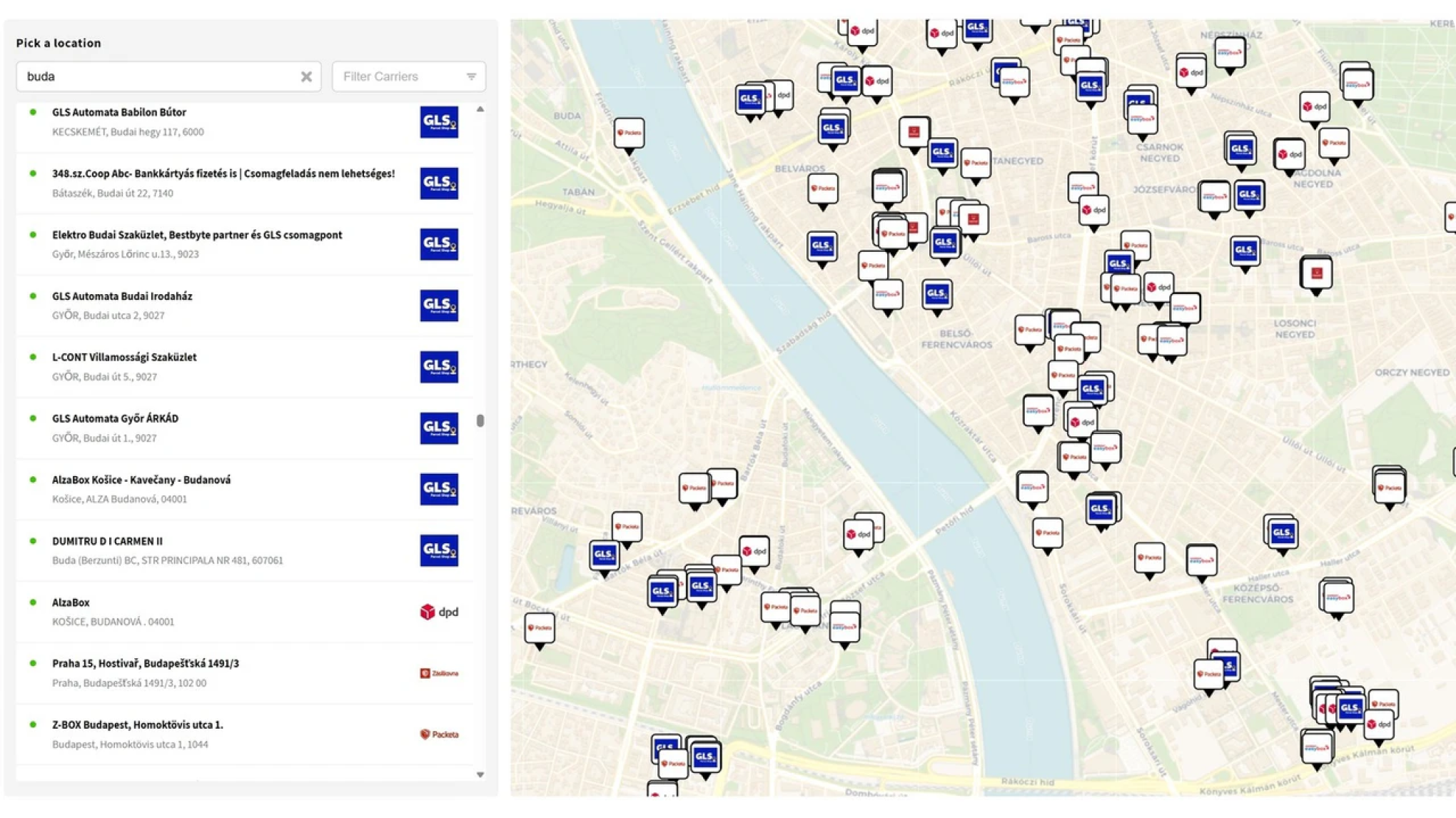
An example of how Parcely.app displays drop boxes
Before building the website, the entire sales process was handled manually through social media. Each order required multiple steps, including customer communication, order confirmation, payment coordination, and shipping arrangement. This created friction for both the customer and the business owner, slowing down purchases and making the process difficult to scale.
The new system transformed this into a structured e-commerce flow, where most steps are automated and handled through the website and integrated tools.
The experience shifted from fragmented communication to a clear and predictable journey, where customers can complete purchases independently, and the majority of operational tasks are automated. This transition reduced manual workload by approximately 45% and enabled a smoother, faster checkout experience, contributing to an increase in completed orders.
Legend:
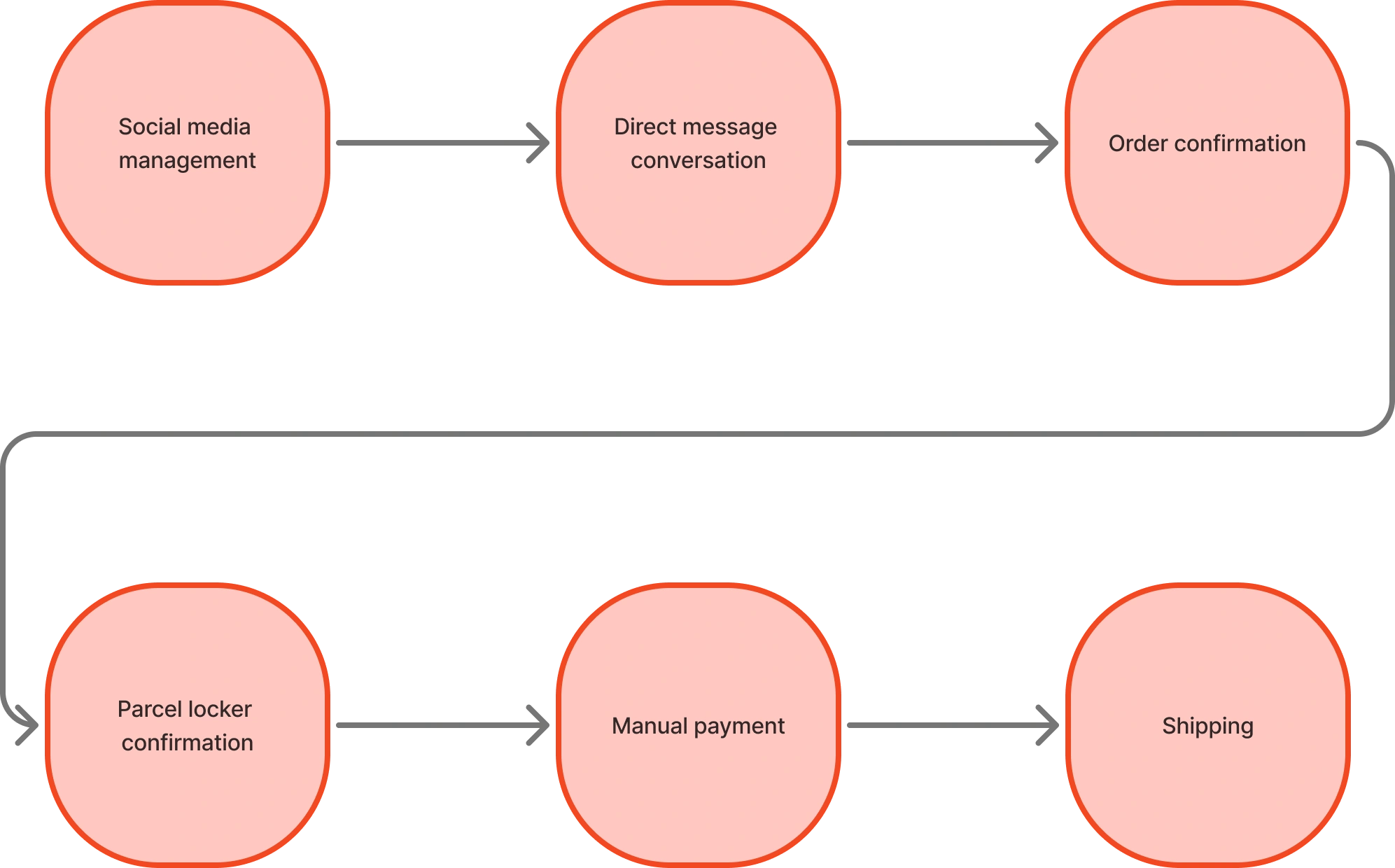
Before. Manual sales process
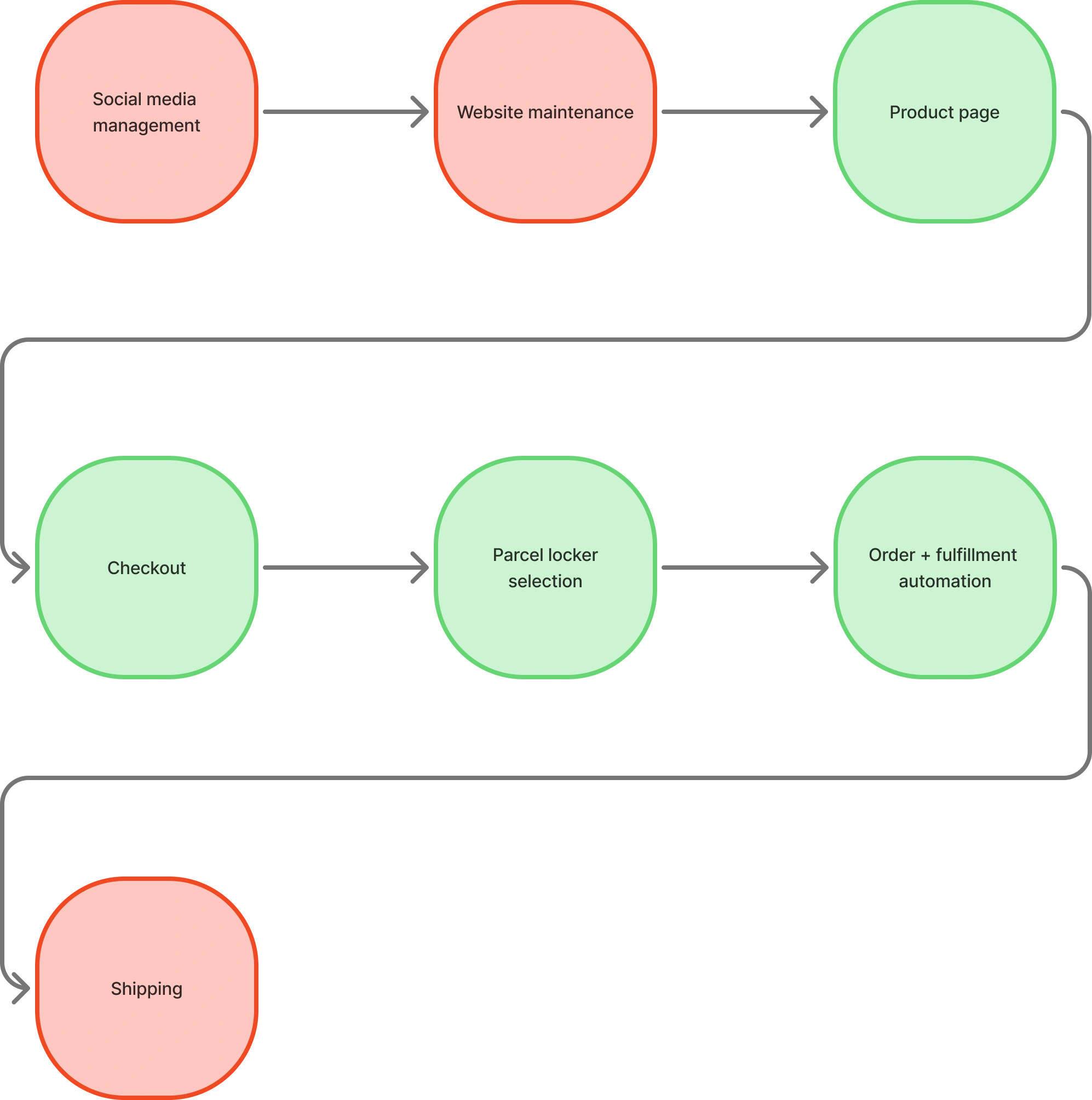
After. Automated e-commerce system
Since the website was built on Shopify, the foundation of the store relied on pre built e commerce templates. Instead of designing layouts from scratch, the focus shifted to selecting and adapting the right template to fit the brand and business needs. I evaluated several Shopify themes based on:
The goal was to find a structure that would support fast product discovery and a frictionless purchase flow, without requiring complex custom development.
After selecting the base template, the work focused on optimizing key parts of the experience. The homepage was structured to quickly communicate the brand and highlight featured products, supporting users arriving from social media. Product pages were optimized for fast decision making, with:
The checkout flow was simplified to reduce drop off, ensuring users could complete purchases in just a few steps, including selecting their preferred parcel locker.
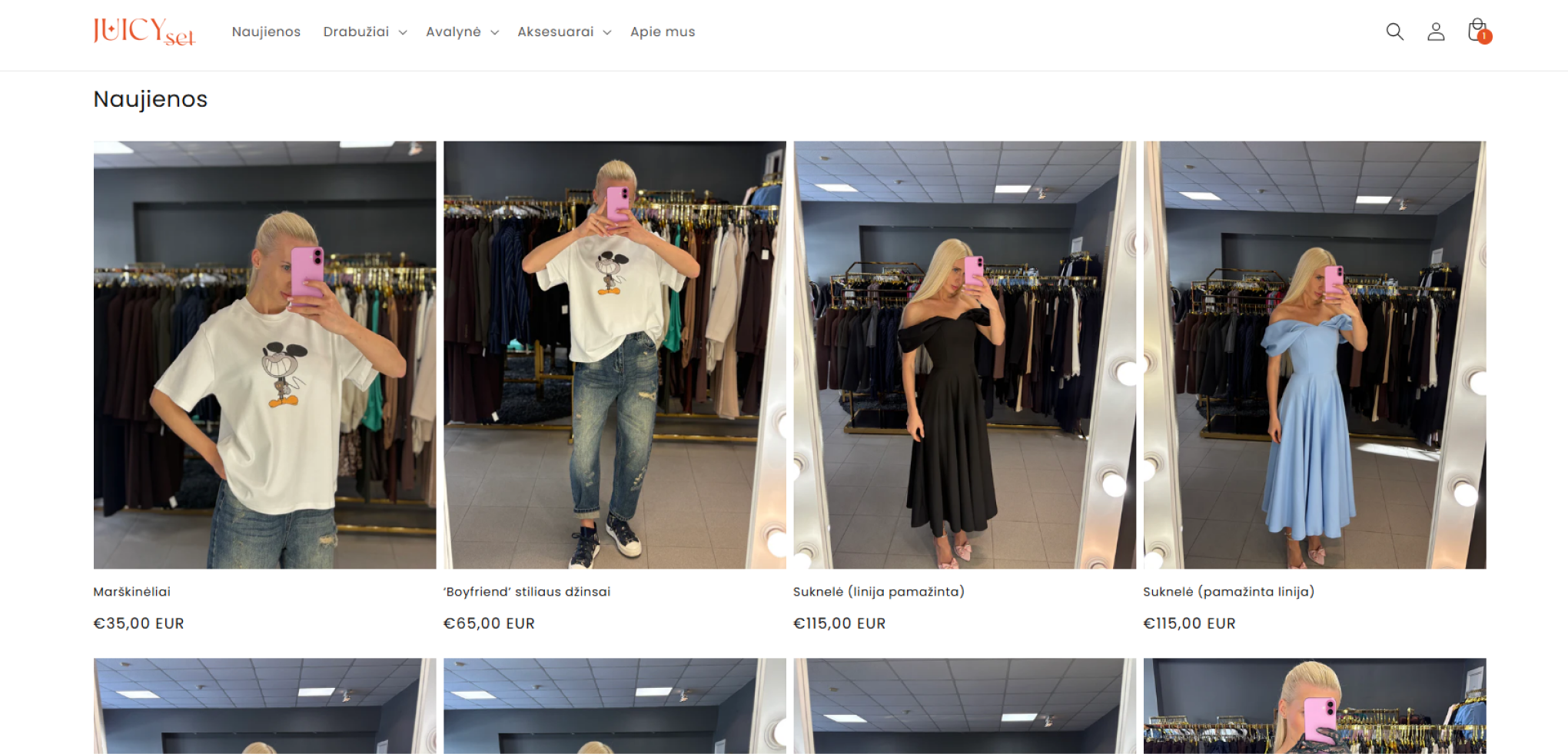
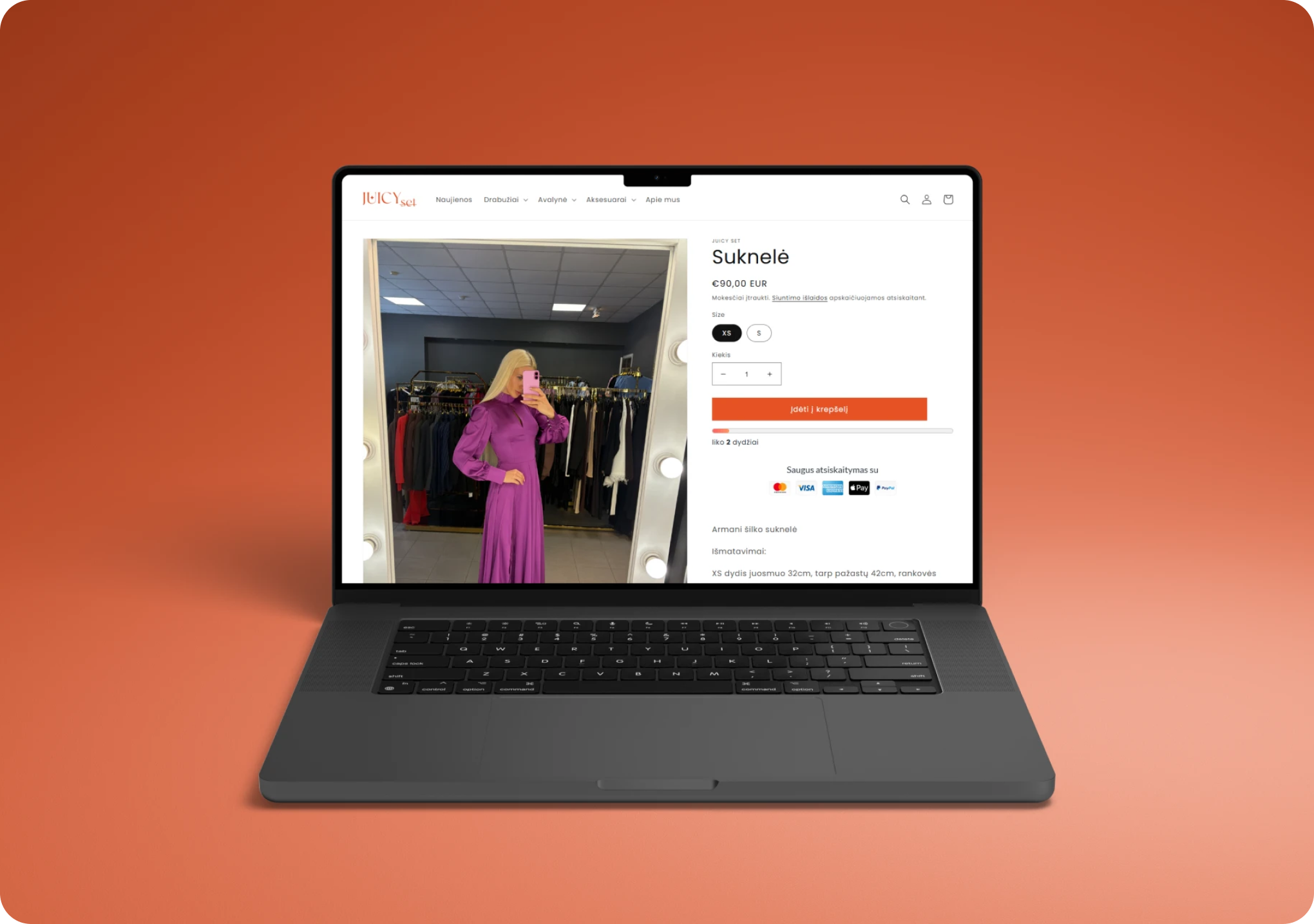
Website landing page
The visual direction followed a simple principle. The clothing should remain the main focus. The interface used clean layouts, strong product photography, and clear typography to create a modern shopping experience.
Since most users arrived through social media, mobile usability was a key priority throughout the design process.
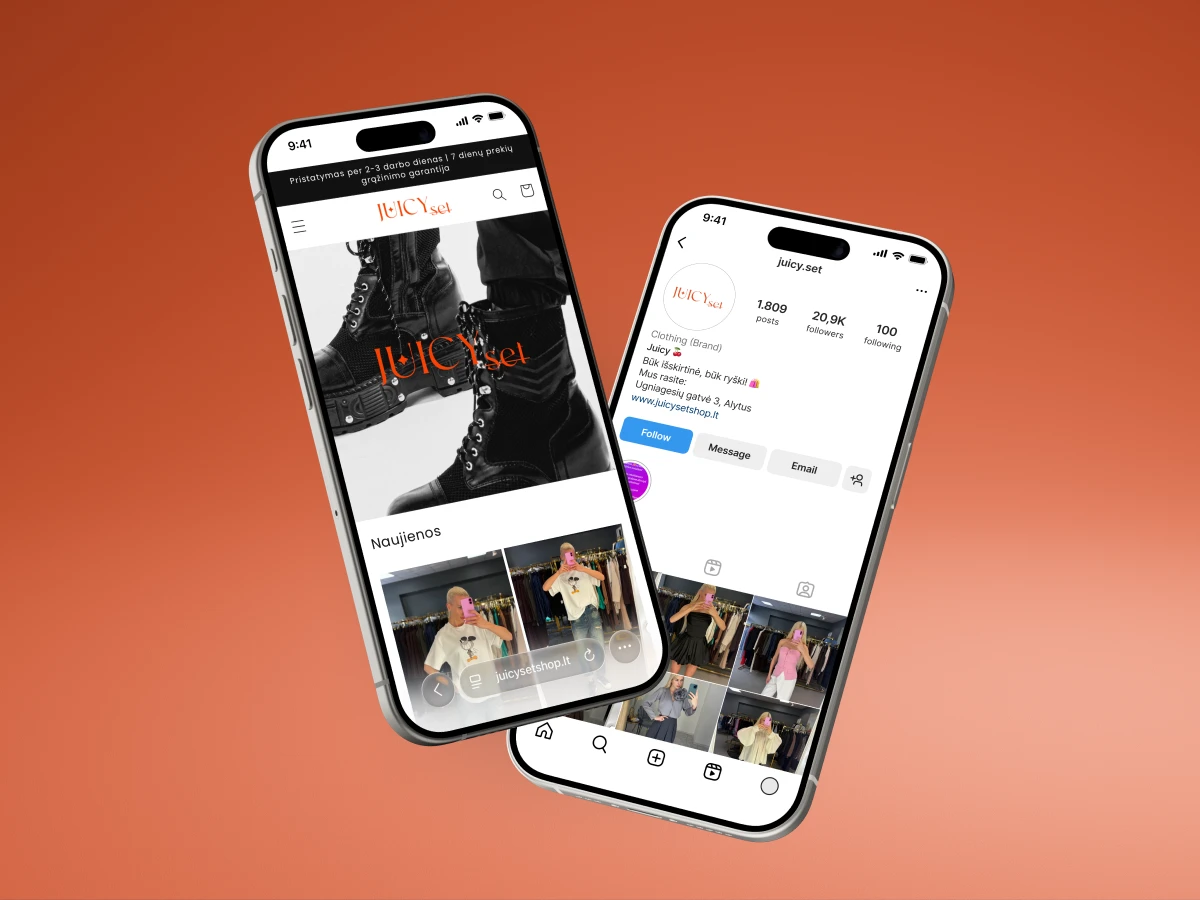
After launching the website, social media channels were aligned with the new purchasing system. Instead of processing orders through direct messages, posts directed customers to the online store. This shift turned social media into a discovery channel while the website handled the purchasing process. The website became the central hub of the business.
Within the first months after launch, the new system produced measurable improvements:
The project helped transform JuicySet from a small social media shop into a structured e commerce brand. Customers gained a faster and more reliable way to browse and purchase products. The founder gained a scalable system that reduced manual work and simplified daily operations.
By combining a clear shopping experience with a practical logistics solution, the business was able to grow while maintaining a manageable workflow.
This project reinforced an important principle of product design. Good design is not only about visual interfaces. It is about understanding the full system that supports the user experience.
In this case, the biggest improvements came from combining a clear digital store with a practical logistics strategy. Solving both the customer experience and the operational challenges behind the scenes created a solution that works for the user and the business.